 Tesla team | 07.10.2024
Challenges and Solutions in Battery Storage Recycling
Challenges and solutions in recycling battery storage systems – from advanced technologies and design to regulation on the road to sustainability.

BESS are a key technology for the transition to renewable energy, as they make it possible to store surplus energy generated from renewable sources such as solar and wind for later use. However, as deployment of these systems grows, so does the need to recycle them sustainably at the end of their life.
Challenges in BESS recycling
- High heterogeneity and complexity: BESS often use different types of batteries, including lithium-ion, lead-acid and others. Each type requires a specific recycling process, which increases the complexity and cost of recycling.
- Safety risks: Lithium-ion batteries, commonly used in BESS, can be prone to thermal runaway and fires, which poses a significant safety risk during recycling.
- Logistical challenges: Large, heavy BESS batteries present logistical challenges when it comes to handling them safely and transporting them to recycling facilities.
- Limited infrastructure: Despite growing demand for battery recycling, recycling infrastructure is often insufficient, which can lead to delays and higher costs.
Solutions and innovation
- Advanced recycling technologies: The development of new technologies, such as hydrometallurgical and pyrometallurgical methods, can improve recycling efficiency and make the recovery of valuable materials from used batteries more profitable.
- Design for recycling: Designing batteries with their future recycling in mind can make disassembly and material separation easier, reducing costs and increasing recycling efficiency.
- Regulatory initiatives and policies: Establishing strong regulatory frameworks and incentives, including extended producer responsibility (EPR), can encourage investment in recycling infrastructure and technologies.
- International cooperation: Cooperation between countries, manufacturers and recycling companies in sharing best practices and technologies can accelerate progress in BESS recycling.
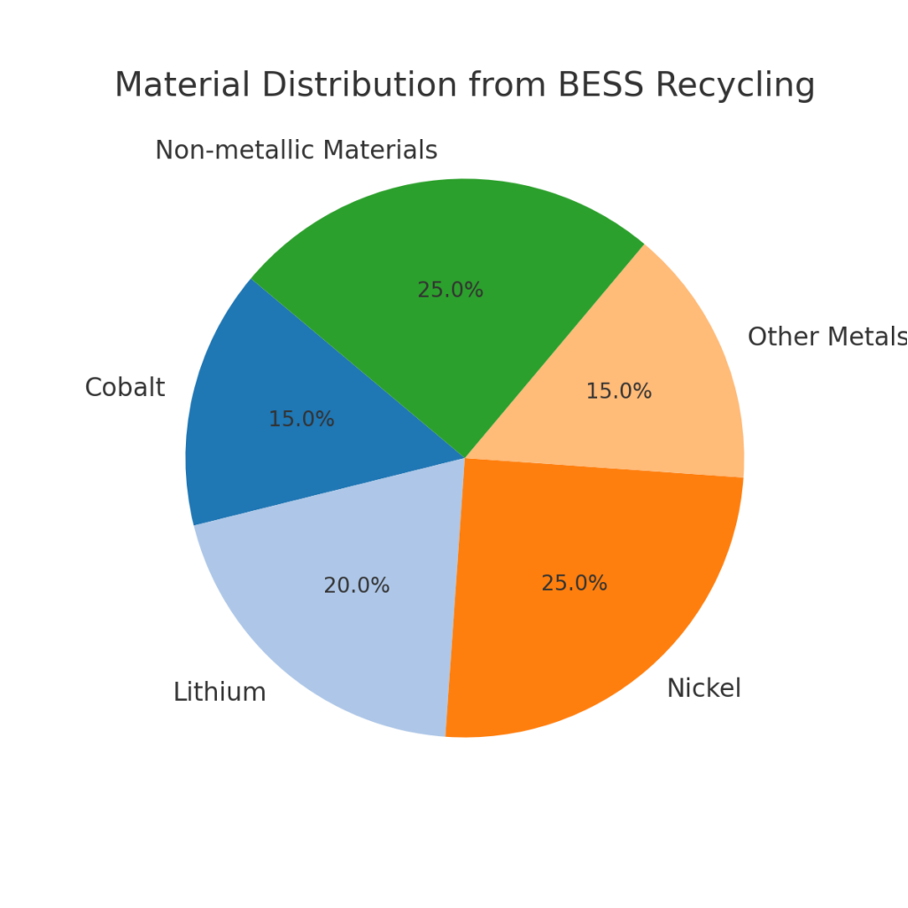
Pie chart – shows the breakdown of materials recovered from BESS recycling, including cobalt, lithium, nickel, other metals and non-metallic materials. The chart gives an overview of the relative importance of the individual materials recovered from recycled batteries.
Developing recycling hubs
Creating regional recycling centres, or "hubs", specialising in the different types of batteries used in BESS could make the whole process more efficient. These hubs would enable better logistics and specialised recycling of specific materials, leading to higher efficiency and lower costs.
Research and development of new materials
Investment in research and development of new materials that are easier to recycle while maintaining, or even exceeding, the performance of current batteries is key. One example is the development of solid-state lithium-ion batteries, which offer not only greater safety but also better recyclability.
Improving collection and sorting
More efficient collection and sorting of used batteries can significantly increase the amount of material available for recycling. Digitalising the collection process and using smart containers and sensors to monitor the condition and fill level of collection points can help increase collection rates and the quality of sorted materials.
Cooperation with manufacturers
It is essential to involve battery and BESS manufacturers in the entire product life cycle, from design to recycling. Initiatives such as extended producer responsibility (EPR) not only encourage the development of more recyclable products but also secure the financial and logistical resources needed for efficient collection and recycling.
Government support
Government policies and financial incentives play a key role in supporting the recycling of BESS batteries. Governments can contribute through research and development grants, tax reductions for recycling companies or stricter regulations on battery recycling and disposal.
Initiatives to improve recycling efficiency
- Creating standardised recycling protocols: Harmonising recycling procedures and techniques internationally could facilitate the exchange of best practices and streamline recycling processes.
- Developing markets for recycled materials: Increasing demand for recycled battery materials could support market development and the economic viability of recycling. This could include creating new applications and products that make effective use of recycled materials.
- Public–private partnerships: Cooperation between governments, battery manufacturers and recycling companies can accelerate the development and deployment of innovative recycling solutions and infrastructure.
Recycling battery energy storage systems is a key challenge on the road to a sustainable future. Although significant obstacles remain, the development of new technologies, policy measures and international cooperation are paving the way for more efficient and cost-effective solutions. These steps are essential not only to minimise environmental impact but also to secure a sustainable future for energy systems.
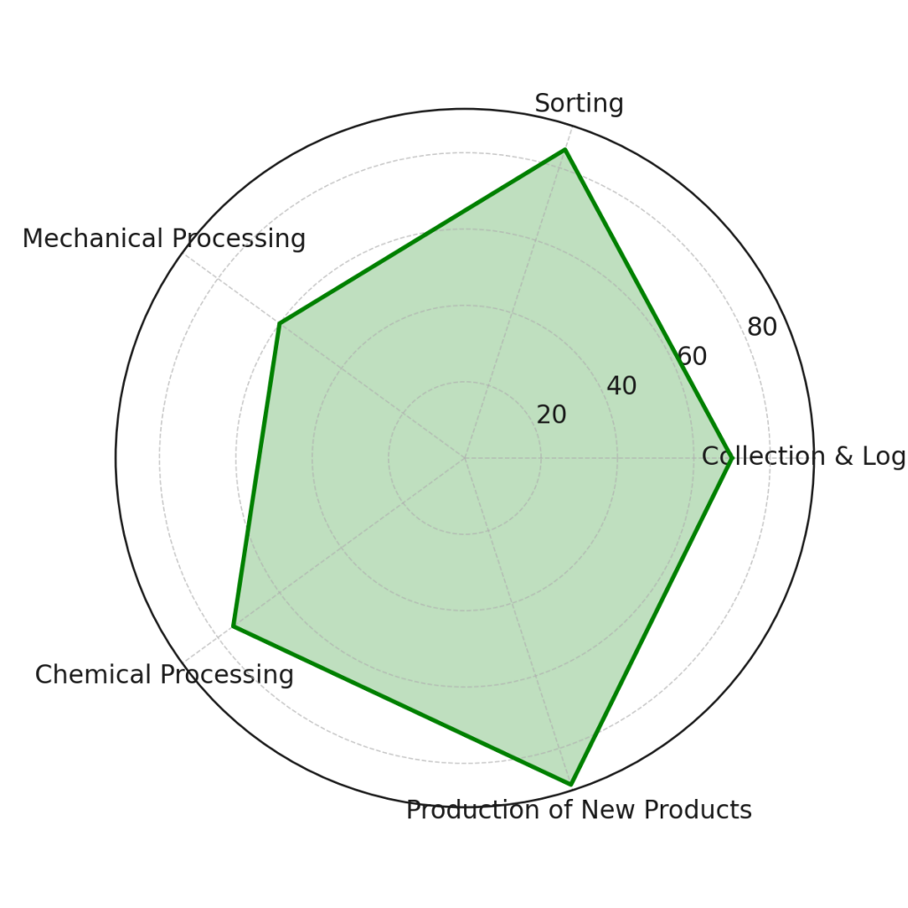
Radar chart – shows the percentage efficiency of the individual steps of the recycling process, such as collection and logistics, sorting, mechanical processing, chemical processing and manufacturing of new products. The chart shows which aspects of recycling are most efficient and which areas need attention for improvement.