 Tesla team | 07.10.2024
Battery Storage Safety
The main safety risks of battery storage, including thermal runaway, and how to prevent them with proper management, cooling and protection.
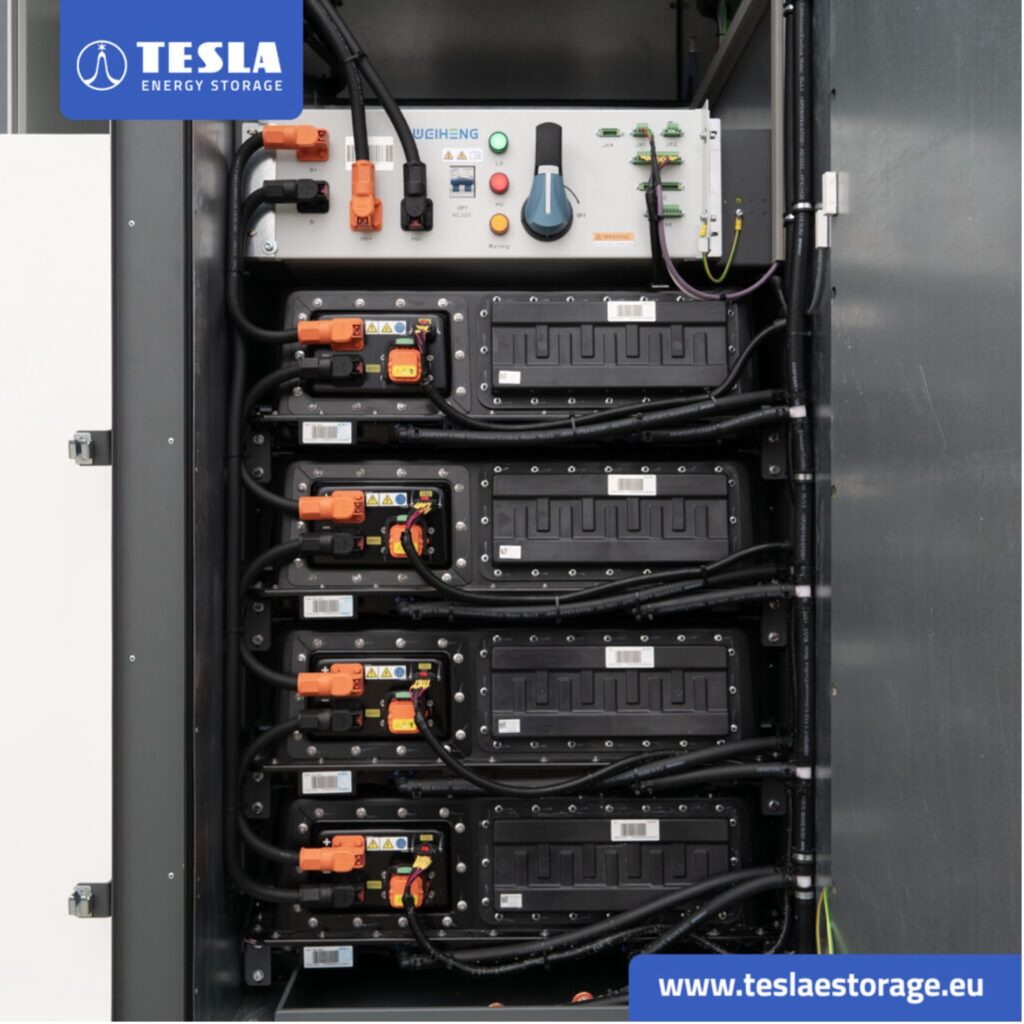
Battery energy storage systems are a key part of the transition to renewable energy. They help balance the mismatch between energy generation and consumption by storing surplus energy during periods of low consumption and releasing it at peak times. Like any technology, however, battery storage brings certain safety challenges that need to be addressed.
Main safety risks
One of the most significant safety issues is the risk of fire. Batteries, especially those with high capacity and power, can generate considerable amounts of heat. If not properly managed, a thermal reaction can occur that may cause a fire or even an explosion.
Another factor is environmental contamination. Batteries contain various chemicals that can be harmful to the environment if they leak. It is essential to ensure that battery storage systems are designed and sited to minimise the risk of these materials escaping.
Safety strategies
Several strategies are needed to ensure the safety of battery storage systems. The first is advanced thermal management and battery condition monitoring. This involves using sensors and cooling systems that keep the batteries within safe temperature limits.
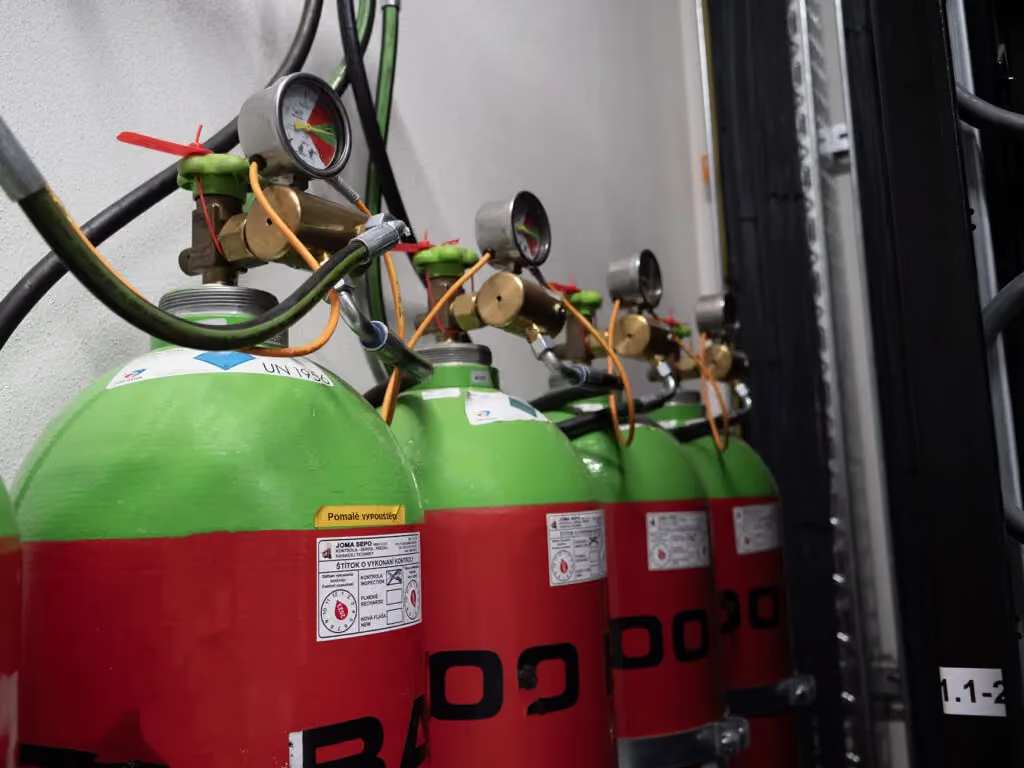
Physical security is also important. Storage systems should be protected against unauthorised access and equipped with fire detection and suppression systems.
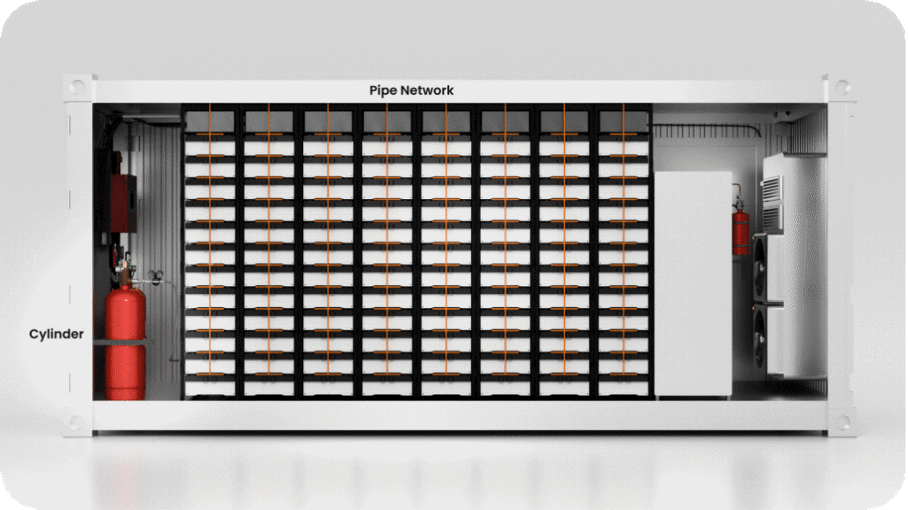
What does a BESS container consist of?
- Container
- Batteries
- BMS (battery management system)
- PMS (power management system)
- PCS (power conversion system)
- Cooling
- Fire protection
Applications
BESS have many useful applications that contribute to their popularity and widespread use. These include:
Complementing renewable sources
Solar panels and wind turbines are limited by the fact that they generate electricity only when the sun shines or the wind blows. Complementing these renewable sources with BESS allows users to draw electricity supplied by the BESS even when the renewables are not generating.
PEAK SHAVING
BESS enables cost savings during peak hours of the day, when energy is more expensive. Users can draw energy from the batteries during these peaks and then recharge the batteries during cheaper night-time hours.
Load balancing
Throughout the day, power plant output rises and falls to meet changing electricity demand. This puts strain on the system. ESS can help flatten the demand curve by charging when electricity demand is low and discharging when it is high.
Uninterrupted power supply
Power outages and supply interruptions can be among the most disruptive and serious problems that operations face. ESS can respond instantly to a power interruption and keep hospitals, data centres and households connected to the grid.
Risks associated with BESS
The use of lithium-ion batteries can create the potential for a number of fire hazards. Although battery safety risks exist, it is important to remember that energy storage technologies are robust and reliable. Risk mitigation is essential for the safe operation of these systems, and a proper understanding of each risk is key. For example, thermal runaway, a common hazard in BESS, is a Class B fire. This is not the same as an electrical fire, or Class C fire. If your fire protection solution is designed for a Class C fire, you may not be prepared for this catastrophic threat. Concentration levels for a Class B fire differ from those for a Class C fire, and suppression alone will not stop thermal runaway. So let's look at the individual hazards one by one.
Thermal runaway
Thermal runaway describes the rapid, uncontrolled release of heat from a battery cell; the battery generates more heat than it can effectively dissipate. Propagation occurs when one battery cell triggers a chain reaction that heats neighbouring cells. Continued heating of further cells often leads to a battery fire or explosion, which can become an ignition source for larger battery fires.
Stranded energy
Even after being affected by fire, ESS can still pose a hazard. As with most electrical equipment, there is a risk of electric shock. Specific to ESS, however, is that energy still remains in the system and can pose a risk. Damaged terminals are difficult to discharge, which can endanger people involved in recovery. Stranded energy can also cause the fire to reignite hours or even days later.
Toxic and flammable gases
During thermal runaway, batteries most commonly release toxic and flammable gases. If the gases do not ignite before reaching the lower explosive limit, an explosive atmosphere can form inside the ESS room or container.
Deep-seated fires
Most ESS typically consist of batteries housed in protective metal or plastic casings inside larger cabinets. Although these layers of protection help prevent damage to the system, they can also prevent water from reaching the source of the fire. As a result, large amounts of water are needed to effectively fight the heat generated by ESS fires, and it is often difficult to cool the hottest part of the fire.
Accidental discharge
One of the main risks of ESS is accidental discharge of the fire suppression system. Depending on the extinguishing agent used in the system, this causes major disruption to the unit's operation. It involves costly clean-up and potential damage to equipment.