Project context and objectives
The energy demand of a holiday resort varies significantly over the course of the year and throughout the day.
One of the key constraints at the site is insufficient reserved capacity, which means the resort's instantaneous energy needs cannot always be covered by the distribution grid alone.
The battery storage system therefore performs several functions at once:
- it supplements power during periods of high resort load,
- it helps overcome reserved capacity limits,
- it provides a backup power source in the event of an outage,
- it enables commercial use of the battery during periods of lower site consumption.
The battery thus becomes an active part of the resort's energy infrastructure rather than a stand-alone energy storage unit.
Solution and technical specification
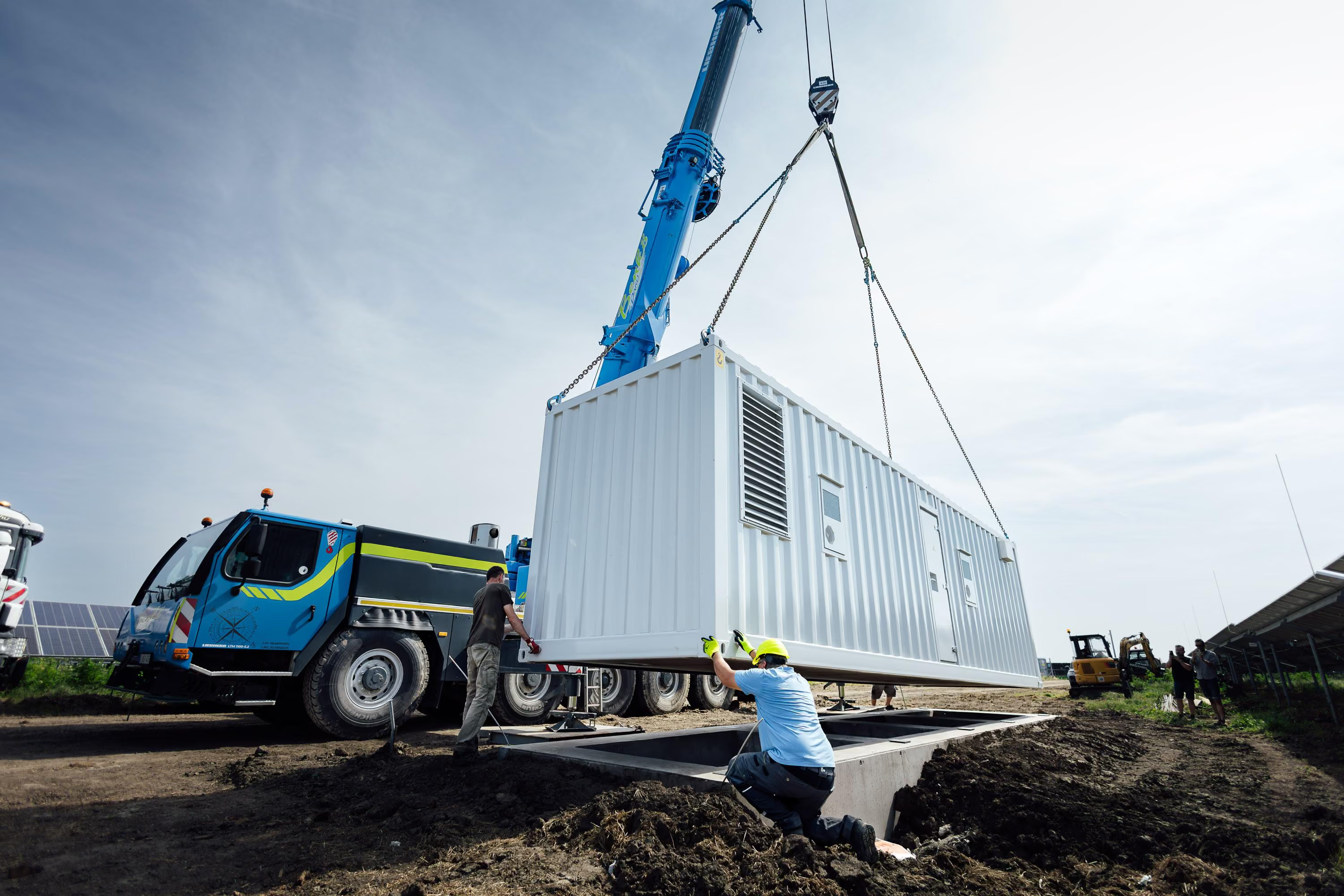
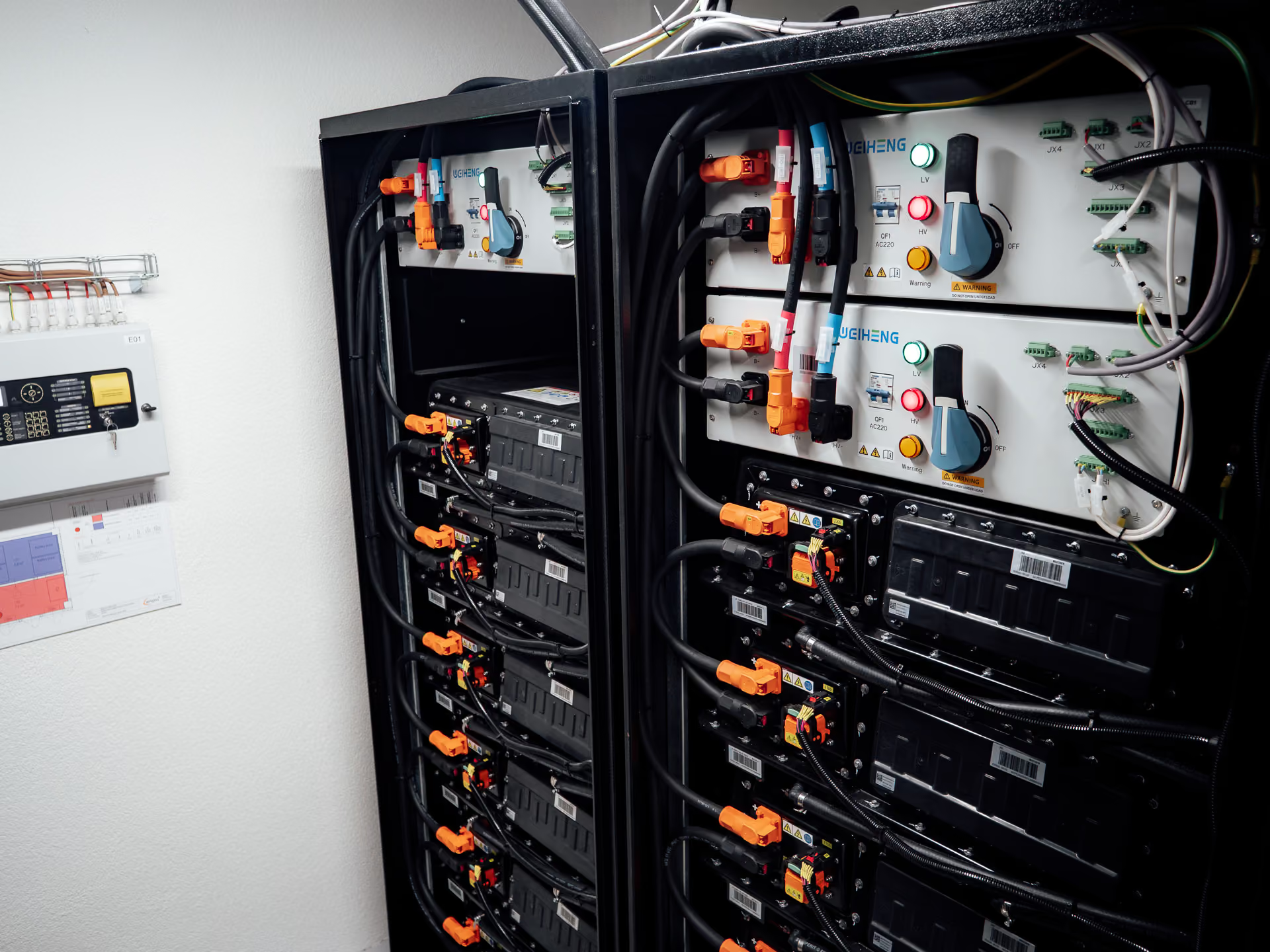
The project is built around a battery storage system installed inside a dedicated technology building.
Key technical parameters
- power: 3 MW,
- capacity: 7.33 MWh,
- battery technology: EVE Energy,
- inverter technology: Siemens Gamesa,
- design: indoor installation in a technology building,
- use: power demand management, site backup and flexibility for the energy market.
The indoor concept makes it possible to concentrate the key technologies in a single controlled environment and to adapt the entire system to the specific operational requirements of the site.
Overcoming insufficient reserved capacity
One of the main tasks of the battery storage system is to cover peak demand that would otherwise exceed the site's reserved capacity.
During periods of increased consumption, the battery can supply the required power directly into the resort's internal energy infrastructure.
This helps to:
- stabilise the site's energy operations,
- cover short-term power peaks,
- reduce the dependence of the site's development on the immediate availability of higher capacity from the distribution grid.
Backup power for the site
The battery system also provides an important element of energy security.
In the event of a power outage or supply restriction, the battery can serve as a backup source for selected parts of the resort's infrastructure.
This is particularly important at a site where many technologies depend directly on a reliable electricity supply.
Commercial use of the battery
The resort's consumption varies considerably over the course of the year.
During periods of lower energy demand, particularly from spring to autumn, the full power and capacity of the battery may not be needed for the site's own operations.
The spare flexibility of the battery system can therefore be used on the energy market through an aggregator.
The battery thus combines two operating modes:
its priority is to meet the resort's energy needs, and when its capacity is free, it can generate additional economic value through the commercial use of flexibility.
Waste heat recovery
Another interesting part of the project is the secondary use of waste heat generated by the inverter technology.
The heat produced by the battery system's technologies is not simply released into the surroundings but can be captured and put to further energy use.
The project thus combines electrical storage with the principle of efficient energy management, making it possible to use energy that would otherwise be an operational loss.
Energy flexibility for the entire resort
The battery storage system combines several functions in one energy system:
- support for insufficient reserved capacity,
- coverage of consumption peaks,
- backup power,
- commercial use of spare capacity,
- secondary use of waste heat.
This allows a single technology installation to be used in different ways according to the site's current needs.
Project outcome
The 3 MW / 7.33 MWh battery storage system is a comprehensive energy solution that addresses the specific needs of a large holiday resort.
The project combines EVE battery technology, European Siemens Gamesa inverter technology and an indoor structural design into a single technology installation.
The result is a system that:
- increases the power available for resort operations,
- helps overcome reserved capacity limits,
- increases the site's energy security,
- enables use of the battery on energy markets,
- increases overall energy efficiency through waste heat recovery.
The Dolní Morava project shows that a modern battery storage system can simultaneously act as power support, a backup source, a flexible commercial asset and part of the efficient energy management of a large site.